—
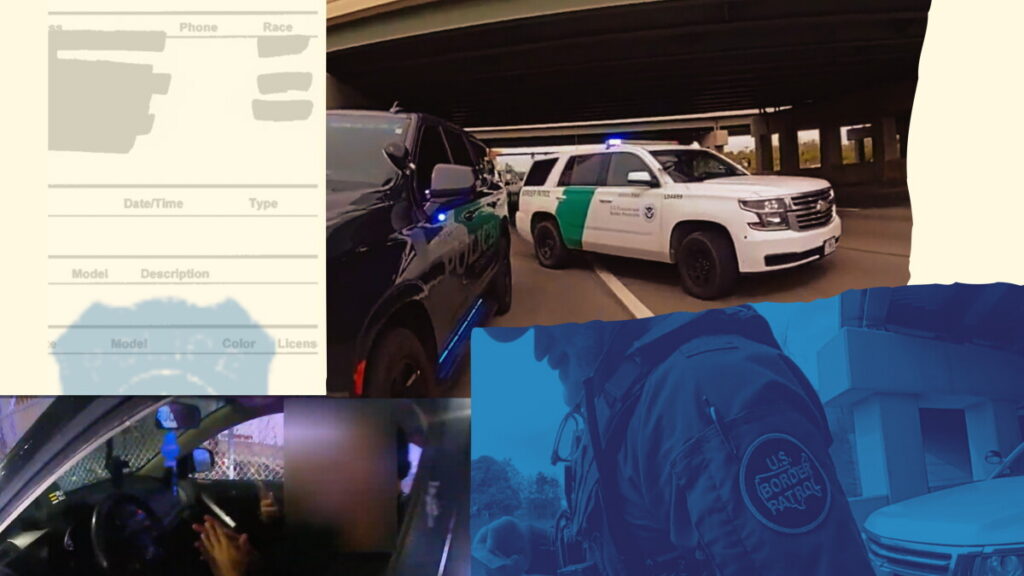
Late on a cool evening in spring 2025, Brownstown Township police officer Matthew Lyles stopped a black SUV as it exited a parking lot.
One headlight was out, he wrote in a police report. But when the driver provided a Colombian license, Lyles called Border Patrol to “validate” it. Federal agents arrested the driver.
Brownstown police didn’t have to turn this minor traffic violation into a federal immigration enforcement operation. Local police generally are not required to assist with immigration enforcement.
Attorneys and some police chiefs argue officers should instead issue a citation or impound the car without involving Border Patrol. Michigan generally recognizes driver’s licenses from foreign countries.
But some police advocates argue that officers need to call federal immigration enforcement to verify identities, check for warrants and ensure road safety.
State policy helped create this dynamic. Since the driver in Brownstown lacked legal status, she wasn’t able to get a Michigan driver’s license. Just a month earlier, in March 2025, state lawmakers shot down a bill that would have expanded driver’s license eligibility for migrants.
Immigrant advocates had spent years making a public safety case for such legislation. They argued that licenses allow migrants to take driving tests and appear in state databases. Without licenses, they warned, routine police interactions could escalate into federal enforcement actions.
Those warnings were well-founded. An investigation by Outlier Media and Michigan Public found that local police reported migrants to Border Patrol at least 388 times since 2021. In most cases, migrants’ lives were upended for minor violations that could have easily resulted in a warning or ticket.
“Usually, my clients get detained because they’re driving and a local police officer will pull them over,” said Shahad Atiya, an immigration attorney in metro Detroit. “Let’s say they run a stop sign. When they cannot produce the driver’s license, usually that’s used as evidence that someone might have a legal status issue.”
More than a dozen states give migrants access to driver’s licenses. Some have also adopted policies designed to separate local policing from federal immigration enforcement.
What the law says
For decades, Michigan politicians have debated whether migrants should be allowed to obtain driver’s licenses.
In 1995, Democratic Attorney General Frank Kelley gave everyone access to licenses as long as they could pass a driving test and prove they lived in the state. Michigan was one of only a handful of states with such a policy.
In 2007, Republican Attorney General Mike Cox issued an opinion that reversed Kelley’s decision, citing implications for state and national security and the potential for fraud.
Lawmakers followed suit with a 2008 law requiring applicants to provide proof of a valid immigration status. Today, a person with a visa can get a driver’s license, but a person who entered the country without authorization cannot, even if they’ve applied for asylum.
Bipartisanship and ‘cowardice’
Some Michigan police chiefs warn that involving local departments in federal immigration enforcement discourages people from reporting crimes. Others — particularly those politically aligned with the Trump administration — view assisting immigration agents as part of their job.
While Michigan lawmakers have left those decisions to municipalities, other states have created guardrails.
Some put direct limits on cooperation between local police and immigration agents. A 2017 Illinois law forbids police from transferring people to U.S. Immigration and Customs Enforcement without a criminal warrant signed by a judge.
When Democrats won full control of Michigan government in 2022, immigration advocates renewed their focus on driver’s licenses.
The coalition backing the reforms called the campaign Drive SAFE, arguing that unlicensed drivers are a danger to everyone on the road.
The bills stalled in the state House along with a long list of Democratic priorities that failed during a dysfunctional session in late 2024.
State Senator Stephanie Chang (D-Detroit) is part of a group of lawmakers who’ve continued to introduce driver’s license legislation during each legislative session. She said Drive SAFE didn’t pass because some Democrats saw it as too “controversial.”
“I don’t know if there’s a way to know exactly how many people have been deported … because of our failure as a state to get this done in 2024,” Chang said.
Republicans forced the resident driver’s license bill up for a vote after taking gaining control of the state House of Representatives in 2025. It failed with six Democrats voting against alongside Republicans.
In 2025, Republicans gained control of the state House. They put the driver’s license bill to a vote as Trump ratcheted up his anti-immigrant campaign. The vote failed 39-64, with six Democrats voting against.
“If this bill passes, Michigan would become a destination state for every illegal alien and prospective illegal alien all over the world,” said state Representative Josh Schriver (R-Oxford).
What’s next?
Chang said the reforms are even more urgent with the second Trump administration’s immigration crackdown.
“Now, [if] you call Border Patrol, there is no question — even if there is no warrant at all, no history of criminal behavior — Border Patrol is coming,” she said. “I think the ramifications of someone not having a driver’s license or state ID now [are] that much greater.”
The sting of Democratic defections during the vote last year hasn’t faded for Danny Celaya, a community organizer who was involved in the Drive SAFE campaign and characterized the “no” votes as “cowardice.”
Still, both Chang and Celaya said they believe Michigan will eventually pass the reforms. Democrats have a chance of retaking the state House next year. Until the bills pass, Celaya said it will be normal for “a grocery trip to lead to a family separation.”