—
Michigan tax audits skipping over out-state big biz, whistleblowers say
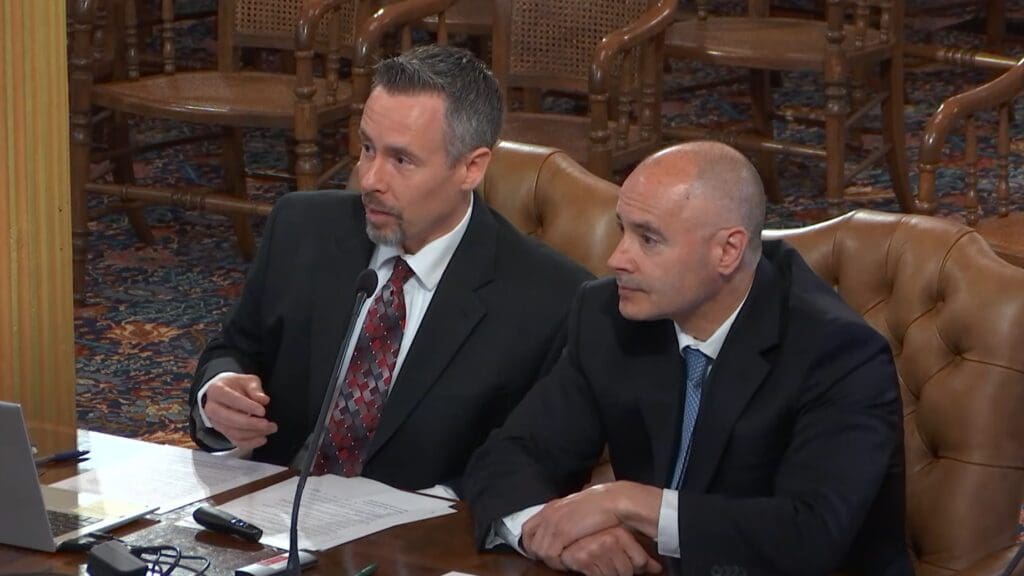
Lansing — Michigan is focusing a disproportionate share of its auditing resources on in-state taxpayers rather than out-of-state big box stores, franchises and chains that historically have supplied a majority of tax revenue for the state, two whistleblowers told state lawmakers Tuesday.
In 2022, out-of-state sales, use and corporate income tax revenue — largely assessed on multistate corporations that have a presence in Michigan, but headquartered out of state — totaled about $7.1 billion, while in-state taxpayers contributed about $6.1 billion that same year, said Clay Cornelius, the Treasury Department’s state assistant administrator who spoke as a concerned taxpayer and employee.
Despite out-of-state taxpayers historically contributing the majority of tax revenue, out-state auditing operations for Michigan have been under “serious erosion,” Cornelius told the House Oversight Committee on Tuesday. In 2025, Treasury had just eight auditors and audit specialists assigned to out-of-state audits compared to the roughly 119 assigned to in-state audits, according to Treasury data.
In 2019, Treasury employed 28 out-of-state auditors and audit specialists.
“We’re talking about money coming in from out-state,” Cornelius said. “If that money declines, who’s going to carry that burden? In-state. The businesses in-state, the citizens in-state are going to carry that burden.”
Sean Lowery, a former team manager for Michigan’s out-state auditors, noted that fewer out-state audits often means the Tax Compliance Bureau is performing more audits of and leaning more heavily on in-state taxpayers.
“They’re getting hit with it now more,” Lowery said of in-state taxpayers. Lowery left the Michigan Department of Treasury in 2024 and now works for the Internal Revenue Service.
Both Lowery and Cornelius stressed that the solution is not to target out-state more than in-state but to find a balance so that both sectors are being monitored proportionally.
State Rep. Jay DeBoyer, a Clay Township Republican who chairs House Oversight, said he has been in communication with the Department of Treasury regarding the issue and hopes to have department representatives testify in June. He also entertained suggestions from Democratic members of the committee to request an independent, third-party audit of the department’s operations.
DeBoyer pointed to declining corporate income tax revenue as reason for better oversight of Treasury’s process. State fiscal experts told lawmakers Friday that 2025 was the weakest year for the “volatile” corporate income tax over the last four years.
“It’s one thing if revenue declines because of an economic condition, but it’s another thing if revenue declines because of a really bad executed strategy within the Treasury,” DeBoyer said.
A spokesperson for the Department of Treasury said the department was not informed of the hearing’s topic but was asked to testify on an unrelated matter. The department values employee feedback, said Danelle Gittus, a spokeswoman for Treasury.
“Treasury looks forward to addressing questions related to Tax Compliance when we meet with the House Oversight Committee in June,” Gittus said.
In a March letter to DeBoyer, Treasurer Rachael Eubanks said some of the decline in state auditors was due to the COVID-19 pandemic and an IRS hiring spree between 2022 and 2023. But the department, overall, has made the decision to phase out its out-of-state auditors and has closed at least five out-of-state offices since 2017, she said.
“Treasury has made a strategic decision to realize savings by phasing out our out-of-state auditor program and utilize in-state auditors to perform the same work related to out-of-state taxpayers,” Eubanks wrote.
Lowery, who was stationed in the Chicago area while working for the state, argued the pullback on out-of-state resources has led to a lack of enforcement and resulting cultural shift among the state’s highest, out-state revenue sources.
“When taxpayers know that you have boots on the ground that can audit you, whether they audit you or not, the fact that they are available and you know they’re there, provides a benefit to tax compliance, voluntary tax compliance,” Lowery said.
Lowery also argued the dearth of out-of-state resources is in part due to department quotas requiring auditors to meet a faster, roughly six-month turnaround on audits. Out-state audits are generally larger and take longer to perform, making it difficult for those employees to meet the quotas set by Treasury, he said.
He also argued the abbreviated audit timeline led to less reliable assessments because it didn’t allow enough time for taxpayers — specifically, large, out-of-state companies being audited by multiple states — to respond to documentation demands that inform an audit’s findings.
Theoretically, Michigan could conduct out-of-state audits with in-state auditors, but they’re not doing so, Lowery said.
“They can’t find staff to do them and they certainly can’t find staff to do them under this leadership and these quotas that they’re getting,” Lowery said.
Both Lowery and Cornelius said they voiced their concern to department leadership without seeing much in the way of change.
“What we want is an admission of a problem here,” Cornelius said. “… We don’t even necessarily have that admission.”
[email protected]