—
Michigan’s 50-year-old bottle deposit system is facing renewed scrutiny after the state’s return rate fell to 69.4% in 2025, which marked its lowest level in decades.
The decline is renewing debate over the policy. Independent grocers say the current system is costly, time-consuming and creates health and safety concerns. Shoppers who rely on the 10-cent deposit say it remains an important incentive to recycle.
Retailers: Get bottles and cans out of grocery stores
The Midwest Independent Retailers Association, which represents more than 1,000 Michigan stores, recently surveyed its members about the bottle return system.
More than 90 percent of respondents said bottles and cans should be removed from grocery stores, according to MIRA CEO Bill Wild. More than 97% cited health and safety concerns.
“Overwhelmingly, they all agreed that it’s time to get this bottle bill or these bottles and cans out of the grocery stores,” Wild said.
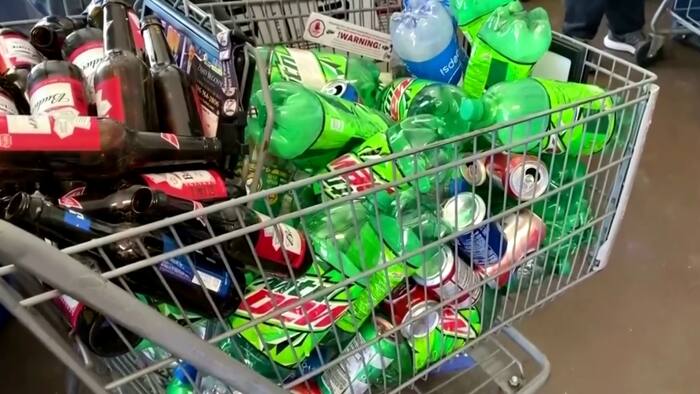
Retailers say they must accept eligible containers, sort them, store them and return them to distributors. At independent stores without automated machines, employees handle the process by hand.
James Garrison, a manager at Honey Bee Market, said the work can take at least 30 minutes each night, in addition to interruptions throughout the day when customers return containers.
“And it’s a dirty job,” Garrison said. “It’s a job that frankly, even the employees don’t want to do because people don’t bring bottles in nice and clean.”
Garrison said stores receive no direct financial benefit from the process and must devote labor and retail space to sorting and storing containers.
“It’s just a wash back and forth,” he said. “But it’s time-consuming.”
State data shows return rate falling
Michigan’s bottle deposit program began in 1976 as a way to reduce litter. State tracking shows the return rate was 98.2% in 1990. It remained above 90 percent for most of the following decades before falling sharply during and after the COVID-19 pandemic.
According to the Michigan Department of Treasury’s latest data:
2025: 69.4% returned; $119.2 million in deposits not refunded
2024: 70.4% returned; $116.4 million in deposits not refunded
2023: 73% returned; $105.3 million in deposits not refunded
In 2025, Michigan collected $389.7 million in bottle deposits and refunded $270.4 million.
The state distributed $29.6 million to retailers, or 25% of the amount owed by under-redemptions after specified adjustments, according to the Treasury Department.
The department’s data notes that the figures do not adjust for containers purchased outside Michigan and returned illegally for a deposit, or for retailers that purchase beverages out of state while avoiding the deposit.
Consumers say the deposit still matters
Some shoppers say the deposit remains a useful incentive.
Reginald Lewis of Detroit said he recycles two or three times a week. He recently brought containers to a return machine and said the refund is important to him.
“It’s important for me to get the money back,” Lewis said. He estimated he can receive close to $20 from a return trip.
Marty Cardamone of Royal Oak said he prefers returning containers at the store because it is convenient while shopping.
“I would prefer to see it stay,” Cardamone said. “It made a difference on the roads.”
He said the deposit is also a good incentive for people who might not otherwise recycle.
MIRA calls for a new recycling system
Wild said MIRA supports recycling but wants Michigan to move away from requiring grocery stores to serve as collection points.
The association is calling for comprehensive recycling options, including curbside pickup and dedicated drop-off centers. Wild said curbside recycling, online grocery shopping and changes in consumer behavior have contributed to the decline in bottle returns.
He also said the association is discussing legislation that would sunset the current bottle bill in two, three or five years. The goal, he said, would be to give the state time to create a replacement system before the current program ends.
“The bottle bill is 50 years old,” Wild said. “What we want to do is sunset it, then we have a timeframe where we have to get a system in place.”
There is also discussion in Lansing about expanding the bottle bill to include noncarbonated beverages such as bottled water and sports drinks. MIRA opposes expanding the current system, saying it would add more work for grocers.
What happens to unclaimed deposits?
Deposits that are not refunded are considered money owed by under-redemption. State data shows $119.2 million in such deposits in 2025.
Under Michigan law, a portion is distributed to retailers, while the remaining money goes to the state’s Cleanup and Redevelopment Trust Fund under the Michigan Department of Environment, Great Lakes, and Energy. Critics say some of that money should be used to expand recycling infrastructure and promote participation.
Garrison said ending the deposit would not mean ending recycling.
“We’re 100 percent on board with recycling,” Wild said. “We’re saying that the state of Michigan should offer comprehensive recycling to every resident in the state of Michigan.”
The debate is expected to continue as lawmakers consider proposals to change the bottle return system.
Copyright 2026 by WDIV ClickOnDetroit – All rights reserved.