—
May 5, 2026, 6:45 a.m. ET
The U.S. Centers for Disease Control and Prevention says hospital emergency room visits for tick bites are about twice as high in April this year than they were in previous years.
Lyme disease cases also are on the rise in Michigan, as the tick population expands to suburban and urban areas.
The Michigan Department of Health and Human Services, the CDC and other health agencies recommend taking steps to protect yourself from tick bites to prevent disease.
This could be an especially bad year for ticks and tick-borne diseases.
Hospital emergency department visits for tick bites in the U.S. are about double what is typical for this time of year, with 114 per 100,000 people seeking emergency tick bite treatment in late April 2026 compared with an average of 59.6 per 100,000 people during the same week in the previous four years, the U.S. Centers for Disease Control and Prevention reported.
That aligns with what Michigan State University Professor Jean Tsao is seeing in the field. She’s a disease ecologist and specializes in tick-borne diseases. Tsao told the Detroit Free Press that the tick population is “exploding” in Michigan as the tiny, eight-legged parasites spread to suburban and urban areas of the state.
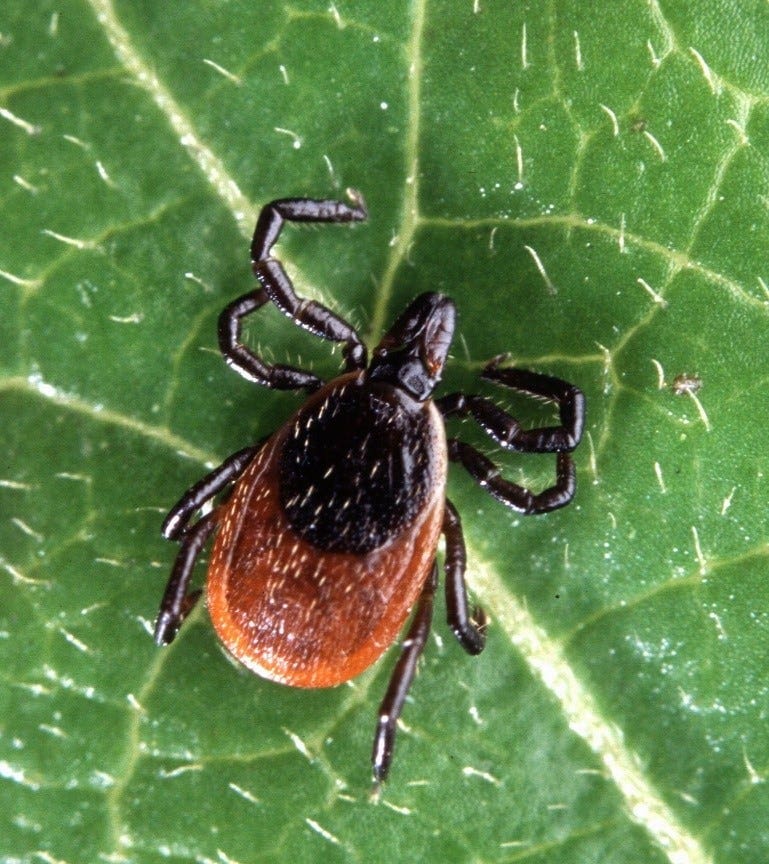
Ticks can carry the borrelia burgdorferi bacteria that causes Lyme disease, along with other microbes that can that can make humans and animals sick after they are bitten. Health officials warn that people should take precautions to avoid tick bites and to keep ticks off their pets.
Lyme disease cases in Michigan nearly quadrupled between 2022 and 2025, according to data from the Michigan Department of Health and Human Services — jumping from 553 in 2022 to 2,167 confirmed cases in 2025.
Here’s what you need to know about how to tick-proof your life:
Avoid areas that are likely to be infested with ticks
The Michigan Department of Health and Human Services reports that ticks prefer grassy, brushy and wooded areas. They can live in decaying fallen leaves and thrive in shady, moist outdoor environments.
One way to protect yourself outdoors is to avoid those areas. If you’re going hiking in the woods, walk in the center of trails to avoid contact with brush, branches, grasses and leaf litter.
Take steps to protect your yard
Because blacklegged ticks, the type known to carry Lyme disease, prefer the shade as well as brushy or grassy areas, the CDC, along with the Michigan Department of Agriculture and Rural Development and MDHHS recommend taking the following precautionary measures:
Create a barrier made of gravel or wood chips at least 3 feet wide between your lawn and wooded areas.
Keep the grass in your lawn mowed short.
Clear out tall grasses and brush and remove leaf litter around homes, barns, sheds and your lawn.
Let more sunlight into your yard by trimming tree branches and shrubs.
Don’t put playground equipment, decks or patios near shrubs, tall grasses, brush, or wooded areas. Choose a sunny location.
Stack firewood in a dry area to keep away rodents, which commonly host ticks.
Your clothes can help you prevent tick bites
When you go outdoors, what you wear matters more than you might think.
Ticks generally need direct contact with skin to bite, and will try to get under your clothing to embed themselves into your skin. To prevent this, the CDC and MDHHS recommend:
Wearing a long-sleeve shirt, long pants, socks and shoes outdoors. Tuck in all of your clothing to provide a protective barrier between ticks and your skin.
Choosing lighter-colored clothing can help you see any ticks that might have climbed onto you and get them off before they crawl to a place on your body where they can bite.
Consider applying an insect repellent containing at least 20% DEET or picaridin before going outside. The synthetic chemicals are effective at repelling ticks.
An insecticide called permethrin can be applied to clothing. It is known to incapacitate ticks by disrupting their nervous system. Permethrin should be used only on clothing and never applied directly to your body, as it can cause skin irritation. Some retailers sell clothing pre-treated with permethrin.
Linda Lobes, president of the Michigan Lyme Disease Association, suggests using a lint roller over your clothing before you enter your home to rid yourself of hitchiking ticks.
Make tick checks an ordinary part of your day
After coming in from outdoors, do a full-body check for ticks. Look under your arms, in and around your ears, belly button, behind the knees, between the legs, around the waist and in the hair. Do the same for children.
Also, try to:
Bathe or shower as soon as you come inside.
Put the clothing you wore outdoors in the dryer on high heat for 10 minutes to kill any hitchhiking ticks.
Examine gear that was brought outside, checking for ticks.
Consider pets
Dogs, cats and other animals also can be carriers of ticks.
Make sure you’re visually checking their fur and thoroughly brushing them when they come indoors. Veterinarians can prescribe tick prevention products to protect them as well.
Lobes suggested using a lint roller on your dog or cat to remove any stray ticks before they come into the house.
Contact Kristen Shamus: [email protected]. Subscribe to the Detroit Free Press.