—
Business groups pitch plan for ‘responsible’ data center regulations
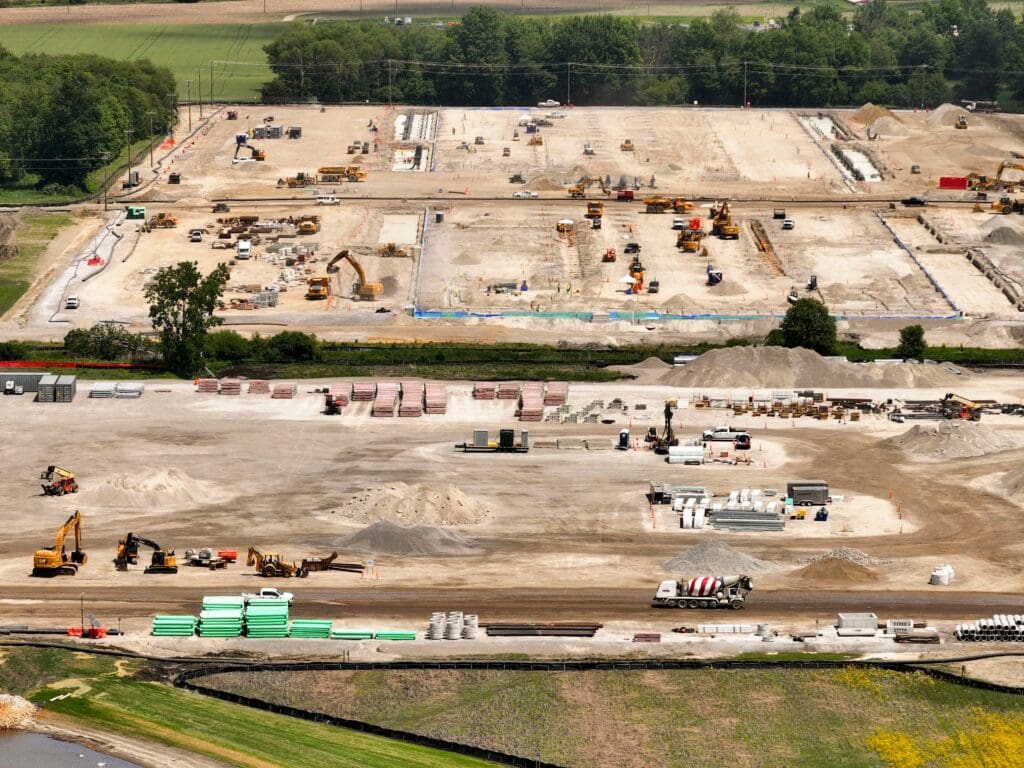
Construction continues on huge data center in Saline, Michigan
Oracle and OpenAI are constructing a massive data center on farmland in Saline Township near Ann Arbor, Michigan.
Consultants commissioned by Michigan business groups recommended that lawmakers shore up the state’s data center regulations to address public concerns about the facilities and to leverage greater economic benefits from them.
In a report released Thursday morning, Lansing-based Public Sector Consultants acknowledged the issues Michiganians have raised about data center developments, such as their potential water use, impact on electricity rates and transparency. The report was commissioned by the Michigan Chamber Foundation and Detroit Regional Chamber.h
Michigan has regulations on energy and water use that protect against some potential harms from data centers, but lawmakers could do more to regulate the facilities and improve public confidence, Public Sector Consultants senior strategist Jeff Guilfoyle said.
“As a state, we have been lagging from a growth standpoint,” he said. “This is an opportunity for some economic investment.”
More: Michigan data center development trails other Great Lakes states
Data centers are warehouses for the computing equipment that powers the internet. Tech companies are racing to build them, especially the hyperscale developments used to train and run artificial intelligence tools. Data center industry experts say the catalyst for hyperscale data center development in Michigan, which took off last year, was the tax credit state lawmakers passed in 2024 that exempted the developments from state sales and use taxes.
Data centers located in Michigan benefit internet users worldwide, but don’t necessarily improve internet availability or speed for neighbors. They can provide significant local tax revenue. For example, the hyperscale data center under construction in Saline Township will pay $1.6 million in taxes to the township annually and another $10 million to local schools.
But neighbors to hyperscale data centers are concerned about noise and light pollution, water use and electricity demand.
“We need to make sure there aren’t harms from these,” Guilfoyle said. “What is the responsible way to build a data center, and (how do we) make sure we do it that way?”
More: Bipartisan Michigan rally calls for moratorium on data centers
The consultants laid out a suite of policy recommendations for state lawmakers that they said would help protect against potential harms of data center development and give the public more confidence in developments proposed in their communities, including:
Offer investments for data center projects that lead to further investments from the tech industry, like building a research facility or business incubator. That could increase the number of permanent jobs that follow data center development.
Enact ratepayer protections in law to ensure data center developers pay for facilities’ impacts on the power grid, even if they are served by utilities not regulated by the Michigan Public Service Commission.
Require data centers that use groundwater to adopt low-water-use cooling or closed-loop technology. A statewide poll commissioned by the Detroit Regional Chamber in May found four in every five likely voters support mandating water-recycling technology for data centers.
Create incentives to encourage data center developers to build facilities on brownfields and former industrial properties.
Limit the use of non-disclosure agreements by governments and public officials.
Publish property tax guidance for local governments to explain the tax benefits from data center developments.
“Demand (for data centers) already exists,” said Jim Holcomb, president and CEO of the Michigan Chamber of Commerce. “It’s growing. We think it’s going to grow more. The question is, is Michigan going to be positioned to lead and compete in this sector?”
The most high-profile data center is under construction on former farmland in Saline Township. It will be built on 250 acres of a 575-acre parcel. OpenAI CEO Sam Altman, executives from Oracle and Related Digital, Gov. Gretchen Whitmer and others celebrated the facility at a press conference there early this month.
“We know how complex of a project this is,” Altman said at the event. “We know what the current attitude towards data centers in the world is… I think we can make this a great example for the future.
“This is a huge bet,” the tech billionaire added.
More: Oracle CEO claims viral Whitmer video ‘manipulated.’ Videographer denies it
Competing data center plans emerge in Lansing
Public Sector Consultants’ recommendations come as competing plans for regulating data centers emerge in Lansing.
A group of state Senate Democrats introduced an eight-bill package last week calling for limitations on facilities’ water use, requirements for community benefits agreements, protections for utility ratepayers and more. Supporters said the bills promote transparency, accountability and benefits for the communities that host data centers.
“The bottom line is that our neighbors’ voices need to be centered when conversations around data center projects occur,” said Sen. Darrin Camilleri, D-Trenton, told The News. He said requiring a community benefits agreement would ensure local leaders had to consent to data center projects for them to move forward.
There are similarities between the Senate Democrats’ proposals and Public Sector Consultants’ recommendations, Guilfoyle said.
“It’s the right conversation,” he said. “Let’s have the conversation.”
A bipartisan group gathered on the Michigan Capitol lawn Tuesday to call for a moratorium on new data centers in the state. The rally drew lawmakers from both sides of the aisle, including conservative state Rep. Jim DeSana, R-Carleton, and democratic socialist Rep. Dylan Wegela, D-Garden City, who both appeared on stage.
A moratorium would just delay Michigan’s ability to take advantage of the tax revenues and other data center
Holcomb said he does not support a moratorium.
“These are tremendous opportunities we have, but they do come with challenges, and the best way to address those is with full, transparent public debate,” Holcomb said. “Sitting on the sideline for a year does not position us well going forward.”
[email protected]
Staff Writer Craig Mauger contributed.
Want to comment on this story? Become a subscriber today. Click here.